Yes, Pilates is highly recommended for managing Parkinson’s disease. The low-impact exercise strengthens the core, improves balance and posture, and enhances flexibility. It also promotes a mind-body connection that can help mitigate stiffness, reduce tremor severity, and improve overall functional mobility. [1, 2, 3, 4, 5]
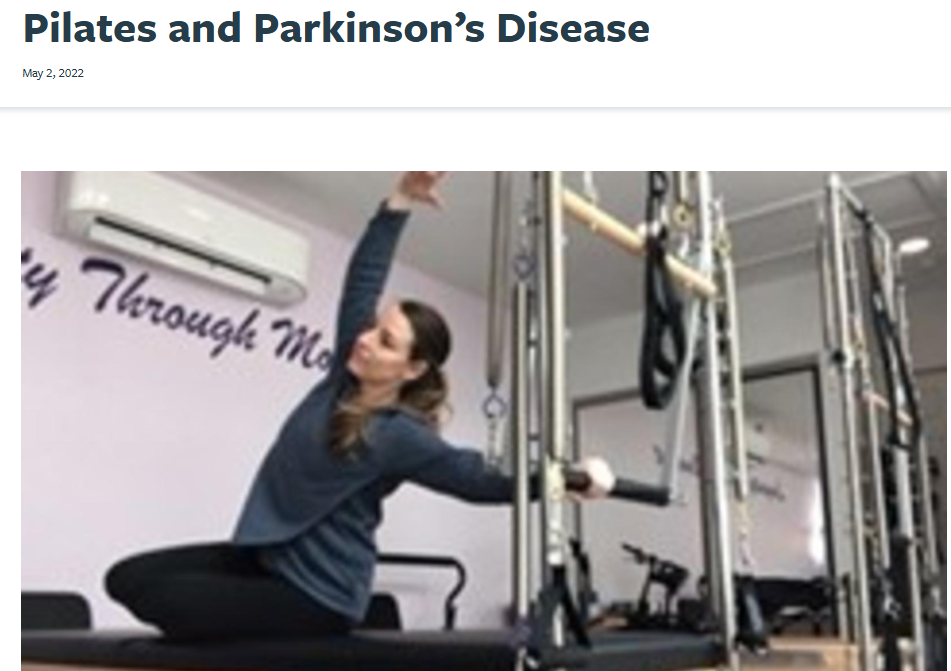
Key Benefits of Pilates for Parkinson’s
- Balance & Fall Prevention: Focuses on strengthening the abdominals, hips, and lower legs.
- Improved Flexibility: Lengthens tight muscles and improves joint range of motion to combat rigidity.
- Better Posture: Strengthens the postural muscles to prevent the stooped posture often associated with the disease.
- Mind-to-Muscle Connection: Enhances body awareness and controlled movement patterns, helping with gait and automatic movements. [4, 5, 6, 7, 8, 9, 10]
Research shows that Pilates can safely be adapted for people with mild to moderate Parkinson’s, and can even be more effective at improving lower limb function than traditional exercise programs. [2, 11]
Getting Started Safely
Before starting any new routine, you should always consult your neurologist or physical therapist. It is essential to work with a certified instructor who has experience with neurological conditions or movement disorders so they can properly modify exercises to your specific abilities. [3, 8, 12, 13]
If you are looking to find a specialized instructor in the Palm Beach area or online, please get in touch with Victoria.
From: https://www.michaeljfox.org/news/pilates-and-parkinsons-disease
In this blog, Michael J. Fox Foundation supporter Peter Klein, who was diagnosed with Parkinson’s in 2015, shares his experience with Pilates. He speaks with certified instructor, Deborah Kenner, known for her research in movement interventions and programs for people living with PD. Peter started his journey with Pilates four years ago with two main goals: to reduce pain from and strengthen his back and to improve Parkinson’s motor symptoms.
Peter: Can you explain Pilates to someone who isn’t familiar with it?
Deborah: Pilates is a series of exercises designed to improve core strength, posture, balance and flexibility. These exercises become a complement to daily activities and enhance quality of life without the burning sensation attributed to working too hard.
Peter: You know what Pilates means to me — what has it done for you and how did you get into teaching it?
Deborah: I have always been attracted to movement. I began ballet training when I was five and continued with a professional career that lasted 10 years. During my teens, while training at Ballet West Conservatory, I was introduced to Pilates and am confident that it kept me injury-free for the duration of my dancing career. I realized that with my background as a dancer and love of anatomy, I could help others with movement. I have since worked with multiple people with PD and have trained specifically in Pilates courses for managing neurological issues.
Peter: What are some of the benefits of Pilates for people with PD?
Deborah: In my opinion, Pilates is helpful to people with PD because the work is a complete mind-body experience that focuses on stability and mobility. The movement is modifiable, feels comfortable, and is easily transferred to activities of daily living.
Two of the key principles of Pilates — center and breathing — are important for people with PD. Center,or core, is the basis for maintaining balance. All activities in Pilates begin with core engagement that provides stability and gives us the freedom to move without fear. Breathing is the very basis of life, but unfortunately, many people are not utilizing efficient breathing. For a community already experiencing tightness and stiff muscles, training the breath can feel like a relief that assists movement.
Peter: Can you talk about the equipment in a Pilates studio, and how you can adapt it for people with PD?
Deborah: Pilates equipment uses resistance through a variety of springs rather than bands or weights. The client must practice control as the spring opens and closes, enhancing the functional movement of muscles. The Pilates method is unique in that modifications are endless and creatively adjusting equipment used for every individual allows them to succeed. In my experience, the equipment can be used in a myriad of ways depending on the person’s needs, making Pilates accessible to people with all levels of fitness.
Peter: What should a person with PD look for in a Pilates instructor?
Deborah: I suggest looking for an instructor with a recognized certification that requires more than 500 hours on all apparatuses; anatomical education and knowledge; understanding of Parkinson’s symptoms and the ability to perform assessments of movement quality and daily symptoms; creativity to modify and intensify exercises; and the ability to problem solve, listen and adjust programming with ease. Working with special populations is a standard certification for many Pilates instructors. I attended training to understand the needs of people with neurological symptoms. A deep understanding of anatomy and simple kinesiology allows me to troubleshoot creatively to find the most appropriate exercises. Outside of qualifications, it’s of course, important to find someone you like working with and who can be a good partner in your fitness journey.
[1] https://www.michaeljfox.org/news/pilates-and-parkinsons-disease
[2] https://pmc.ncbi.nlm.nih.gov/articles/PMC12300528/
[3] https://thefitnessedgeps.com/2025/09/22/pilates-for-parkinsons/
[4] https://appiclinics.com/pilates-and-parkinsons/
[5] https://finesse.ie/5-benefits-of-pilates-for-parkinsons/
[6] https://www.pilates4parkinsons.com/copy-of-about
[7] https://www.parkinsons.org.uk/magazine/experts/pilates-and-parkinsons
[8] https://www.ohsu.edu/sites/default/files/2019-06/Pilates-for-Parkinsons-disease-patients.pdf
[9] https://www.youtube.com/watch?v=yWBn0Ozt2fU
[10] https://www.pilates.com/pilates-for-people-with-parkinsons-disease/
[11] https://pmc.ncbi.nlm.nih.gov/articles/PMC6723274/
[12] https://www.instagram.com/reel/DJ2AHQ6uJne/
[13] https://appiclinics.com/pilates-and-parkinsons/
[14] https://www.betterhealth.vic.gov.au/pilates-health-benefits